How long does mushroom spawn last? Fridge, room temperature and signs it's past it
Grain spawn keeps about one to three months in the fridge and only a couple of weeks at room temperature; sawdust and plug spawn keep longer. Pink oyster can't go in the fridge at all. This guide gathers sellers' stated shelf lives, how to store spawn, cultures and kits, and how to tell old spawn that's still good from spawn that's past it.

Derick13 min read
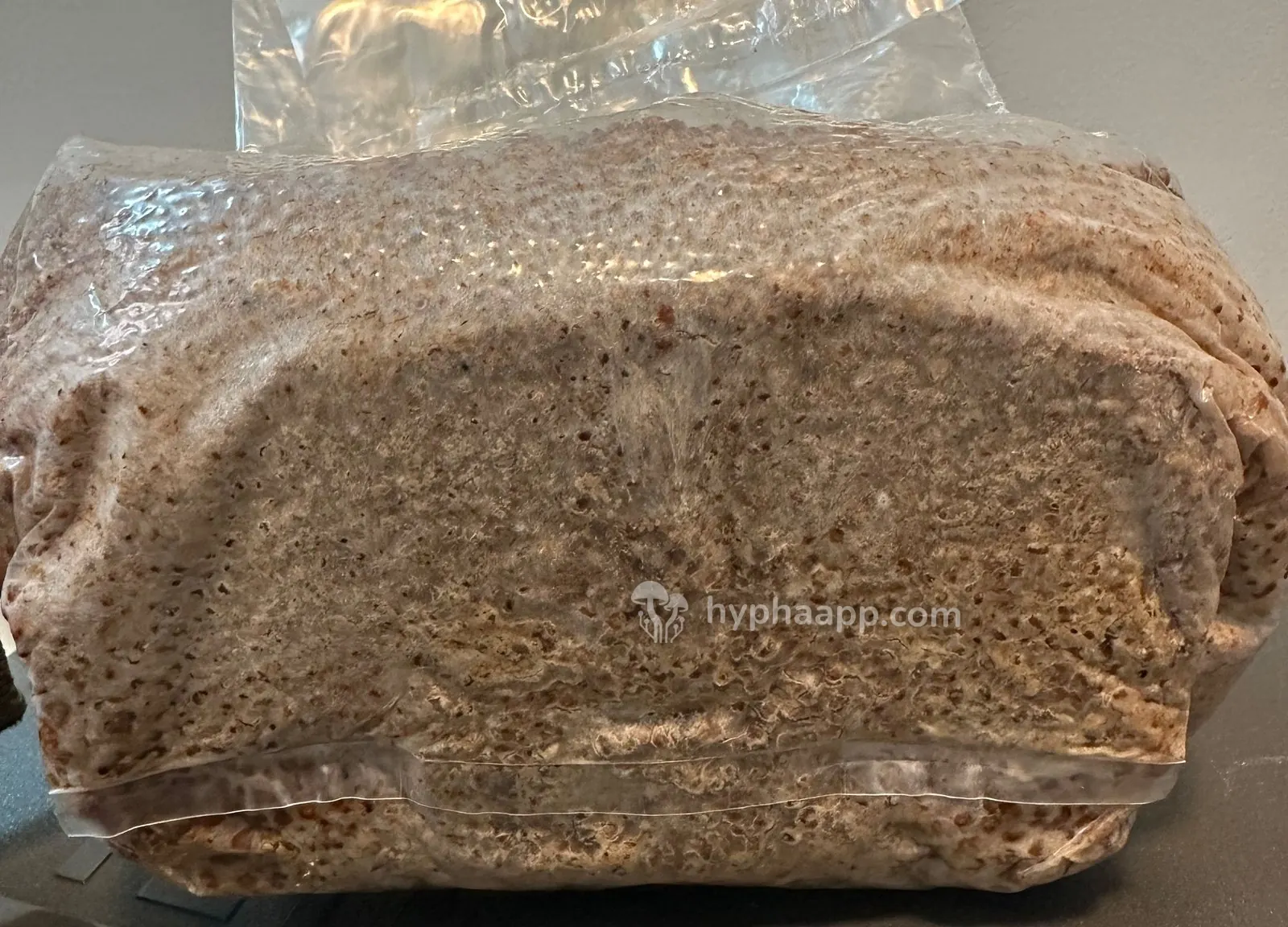
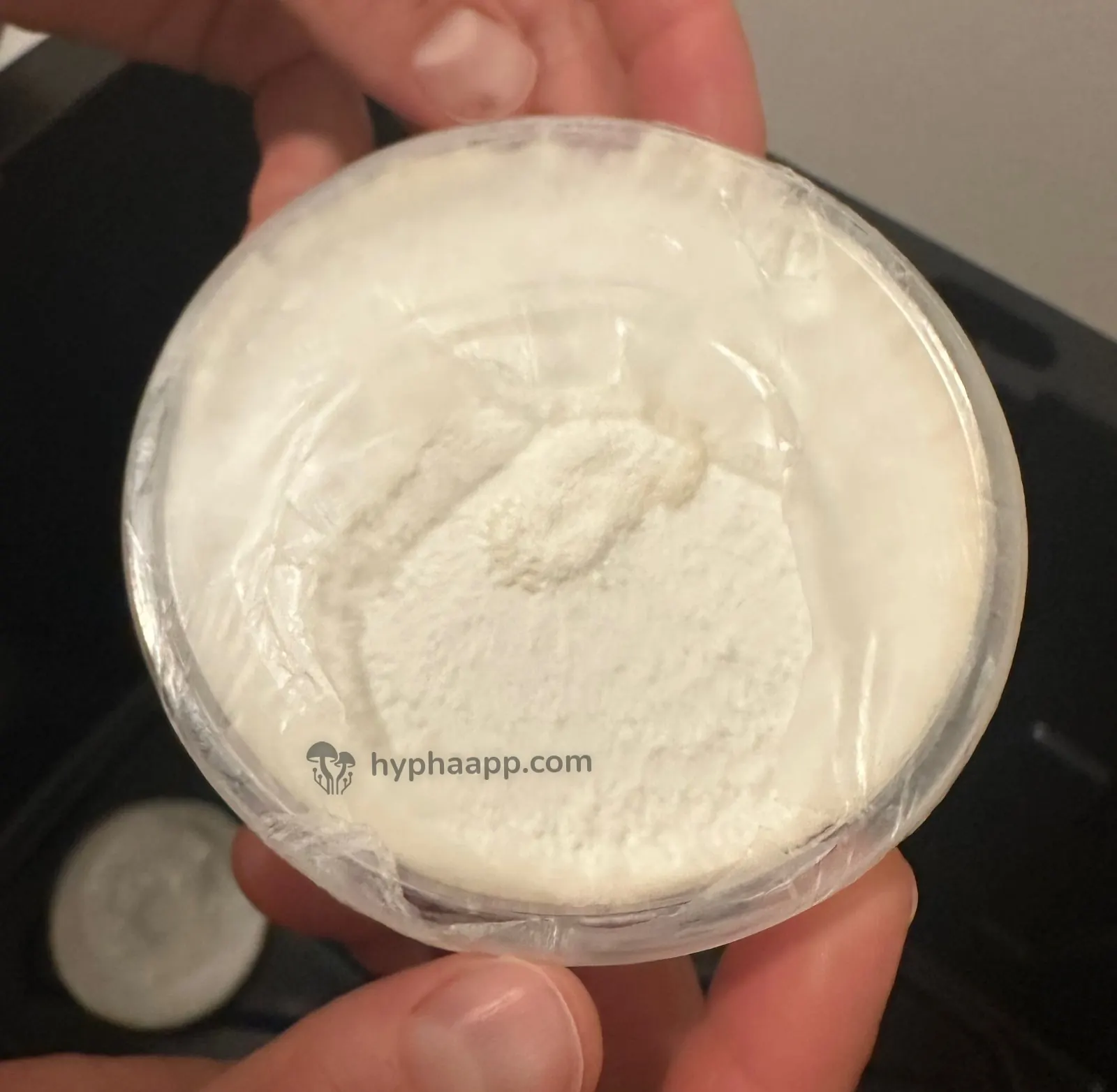
Grain spawn keeps about one to three months in a fridge at around 4°C (39°F), depending on the seller, and only a couple of weeks at room temperature once it's fully grown through. Sawdust and plug spawn keep longer, roughly four months to a year in the fridge. The big exception is pink oyster: it can't be refrigerated, and sellers give it a month at most. For the rest, North Spore's help center puts it simply: "The fresher the better, but mycelium is pretty resilient" (North Spore help center). If you're tempted to stock up over Black Friday, buy only what you can use inside your seller's window (our advice). Our photos show our own grain bag, a plate and fruiting bags, not a storage trial.
Sources: Field & Forest Products, North Spore's help center, Johnny's Selected Seeds, Caley Brothers, Fungi Perfecti, Rootlab, a Penn State culture-handling paper, Penn State Extension and UF/IFAS Extension, checked 22 November 2026.
How long does grain spawn last?
One to three months in the fridge by most sellers' figures, and about two weeks at room temperature once it's fully colonized.
| Source | In the fridge | At room temperature |
|---|---|---|
| Field & Forest Products | "grain spawn -2 months" (Field & Forest) | Leftover spawn in an opened, folded bag, no temperature given: "use promptly to avoid contamination and drying (within 2 weeks)" (Field & Forest) |
| North Spore | "Grain spawn will store for three months in a refrigerator" (North Spore help center) | No figure given |
| Caley Brothers (UK) | Grain or sawdust spawn at 2–5°C: "use within 1 month" (Caley Brothers) | No figure given |
| Rootlab (Australia), grain bags you colonize yourself | At 4–6°C, which "will slow their metabolism and help to keep them fresh for longer" (Rootlab) | Vigour "starts to diminish from day 14" after full colonization (Rootlab) |
| Penn State, button mushroom spawn | At about 4°C "for up to 6 months, although 4 months or less is preferable" (Royse and Wilkinson, Penn State) | Not covered |
| UF/IFAS Extension, oyster spawn | At 4°C (39°F), it "can last for many months unless it dries out or gets contaminated" (UF/IFAS) | Not covered |
For bought grain spawn, the spread is one month (Caley Brothers) to three (North Spore). We found no source that tested sealed grain spawn on a shelf at room temperature, so treat that as weeks, not months (our reading).
The fridge slows mycelium without stopping it: "Approximately one day's growth at 23°C is equivalent to about one week's growth at 4°C", Penn State's paper says, so even chilled spawn ages, and "prolonged storage of spawn may lead to compaction, sectoring, or other problems" (Penn State). Making your own? See our grain spawn guide.
How long do sawdust and plug spawn last?
About four months to a year in the fridge, by the US sellers' numbers.
| Source | Sawdust spawn, refrigerated | Plug (dowel) spawn, refrigerated |
|---|---|---|
| Field & Forest Products | "sawdust spawn - 4 months" (Field & Forest) | "plug and peg spawn- 6 months" (Field & Forest) |
| North Spore | "Plug and sawdust spawn will store for six months to a year in a refrigerator" (North Spore help center) | The same |
| Johnny's Selected Seeds | "refrigerate for up to 6 months, but fresh spawn will have the best chance of success" (Johnny's sawdust sheet) | The same wording (Johnny's plug sheet) |
| Caley Brothers (UK) | "use within 1 month" at 2–5°C (Caley Brothers) | "use within 1 month", though "Your dowels can last upto 6-8 weeks if needed if refrigerated" (Caley Brothers) |
Caley Brothers is the outlier at one to two months. Whatever the form, keep the bag shut: Johnny's says "Do not open the bag prior to the day of inoculation as it will significantly heighten the risk of contamination" (Johnny's). What each form is for is on our spawn glossary page.
Which spawn should not go in the fridge?
Pink oyster above all, plus almond agaricus and other warm-weather strains.
| Source | Pink oyster | Other exceptions |
|---|---|---|
| North Spore | "cannot be refrigerated and is best used within one month of receipt" (North Spore help center) | Almond agaricus "will keep at room temperature for six months" (North Spore help center) |
| Field & Forest Products | "Exceptions (cannot be refrigerated): Pink Oyster (1 month)" (Field & Forest) | "Almond Agaricus (up to 1 year)" (Field & Forest) |
| Caley Brothers (UK) | "this cannot be refrigerated. Keep at a cool temperate, not below 10°C and use within 5 days of receipt" (Caley Brothers) | None listed |
| UF/IFAS Extension | Not named, but "cultures of tropical strains of Pleurotus should not be refrigerated" (UF/IFAS) | Tropical oyster strains in general |
For pink oyster the spread runs from five days (Caley Brothers) to a month (North Spore, Field & Forest). North Spore's note on its pink oyster kits says "Pink oyster mushrooms don't tolerate temperatures below 40 degrees F, so skip the fridge with these" (North Spore help center), which rules out a cold garage in winter too (our reading). Its thin mycelium can look like dead spawn; Field & Forest says "the grain is still fully colonized and should be used within a month of receiving" (Field & Forest). More in our pink oyster grain spawn guide. We found no seller list of every strain that can't take cold, so ask before anything sold as tropical goes in the fridge (our advice).
How long do liquid culture syringes and jars last?
North Spore gives its liquid cultures "up to 2 months" in the fridge, and pink oyster cultures a month at room temperature (North Spore help center). Other sellers rate theirs from a few months to two years; our liquid culture buyer's guide has that spread, fridge do's and don'ts, and how to test an old syringe on agar, and homemade jars are in how to store homemade liquid culture. Both say the same thing: use a liquid culture in its first month or two, and test it before you trust it with grain (our reading).
How long do agar plates and slants keep cultures?
Months on a plate and up to a year in a slant, in the fridge, if they can breathe and you transfer them before they dry out.
| Source | Plates | Slants (test tubes) | Without a fridge |
|---|---|---|---|
| North Spore | "up to 6 months"; after 4 months, "we recommend checking the viability of the culture before use" (North Spore help center) | "long term in cryostorage, or up to a year in the refrigerator" (North Spore help center) | Pink oyster and almond agaricus cultures only: room temperature, used within a month (North Spore help center) |
| Penn State, button mushroom cultures | "Four to 6-week old agar cultures may be stored at about 4°C for 4 months" (Penn State) | The same | "Non-refrigerated agar cultures should be transferred at least every 60 days" (Penn State) |
| UF/IFAS Extension | Mother cultures at 4°C (39°F): "sub-culture every 6–12 months" (UF/IFAS) | Not separated | Not covered |
Drying out ends an agar culture: "Storage time is limited because agar cultures dry out even when refrigerated", and they "should never be incubated or stored in a closed system, such as a refrigerator, without a fan to circulate fresh air" (Penn State). Don't freeze them either: freezing on agar without cryoprotectants "may damage or kill the mycelium and must be avoided" (Penn State). A capped tube holds more agar and loses less water than a plate, which is why slants last longer (our reading).
To revive one, move a small piece from the growing edge to fresh agar (our advice). Penn State says "the original plug of inoculum in the center of the tube should not be used for new transfers" (Penn State). What normal growth looks like is in what mycelium looks like on agar.
How long do mushroom grow kits and blocks keep?
From a few days to a few months; pink oyster kits keep the least. North Spore's fruiting blocks "can be stored for up to 4 weeks or until you see mushrooms beginning to grow in the bag", with "No refrigeration is necessary", and "Shiitake blocks can only be stored until the block turns dark brown, at which time they must be used" (North Spore help center). Boxed spray-and-grow kits keep "in the fridge for around 2-3 months" (North Spore help center); Caley Brothers gives its kits a month at 2–5°C, and pink oyster kits "within 5 days of receipt" (Caley Brothers).
Our gift guide has kit windows from five sellers, and our beginner kit guide covers which kit to buy and how to start it. For shiitake, browning is part of getting ready to fruit: see is my shiitake block ready.
How can you tell if old spawn is still good?
By colour, smell and whether it has started to fruit; a lot of what old spawn looks like is normal. Field & Forest says aged spawn "can develop thick white mycelium", and as it breaks down its substrate it leaves "a yellow fluid that can collect at the bottom of the spawn bag and/or small patches of brown on the exterior of the spawn. These are all normal characteristics of spawn" (Field & Forest).
| What you see or smell | Usually means | Source |
|---|---|---|
| Thick white mycelium; sawdust with a white crust and brown inside | Normal: the inside "is still fully colonized" | Field & Forest |
| A little yellow liquid, small brown patches | Normal by Field & Forest; Rootlab calls the liquid "a sign that the mycelium is stressed or old" | Field & Forest; Rootlab |
| Thin, patchy mycelium after shipping | Broken up in transit: "Let it sit for a few days and it should bounce back" | North Spore help center |
| Mushrooms or pins in the bag | Use it now (our reading); for fruiting bodies on the filter patch, Johnny's says to "carefully remove them without causing damage to the filter and bag" | Johnny's |
| Grain packed into a dense brick, or dry and shrunken | Overgrown or drying; Penn State wants grain "well covered, but not overgrown", and UF/IFAS says stored spawn lasts "unless it dries out or gets contaminated" | Penn State; UF/IFAS |
| Green or black anywhere | "the culture may be contaminated and should be discarded" | North Spore help center |
| Rancid or sour smell | Spoiled; Caley Brothers says dowels that "begin to smell rancid" likely are | Caley Brothers |
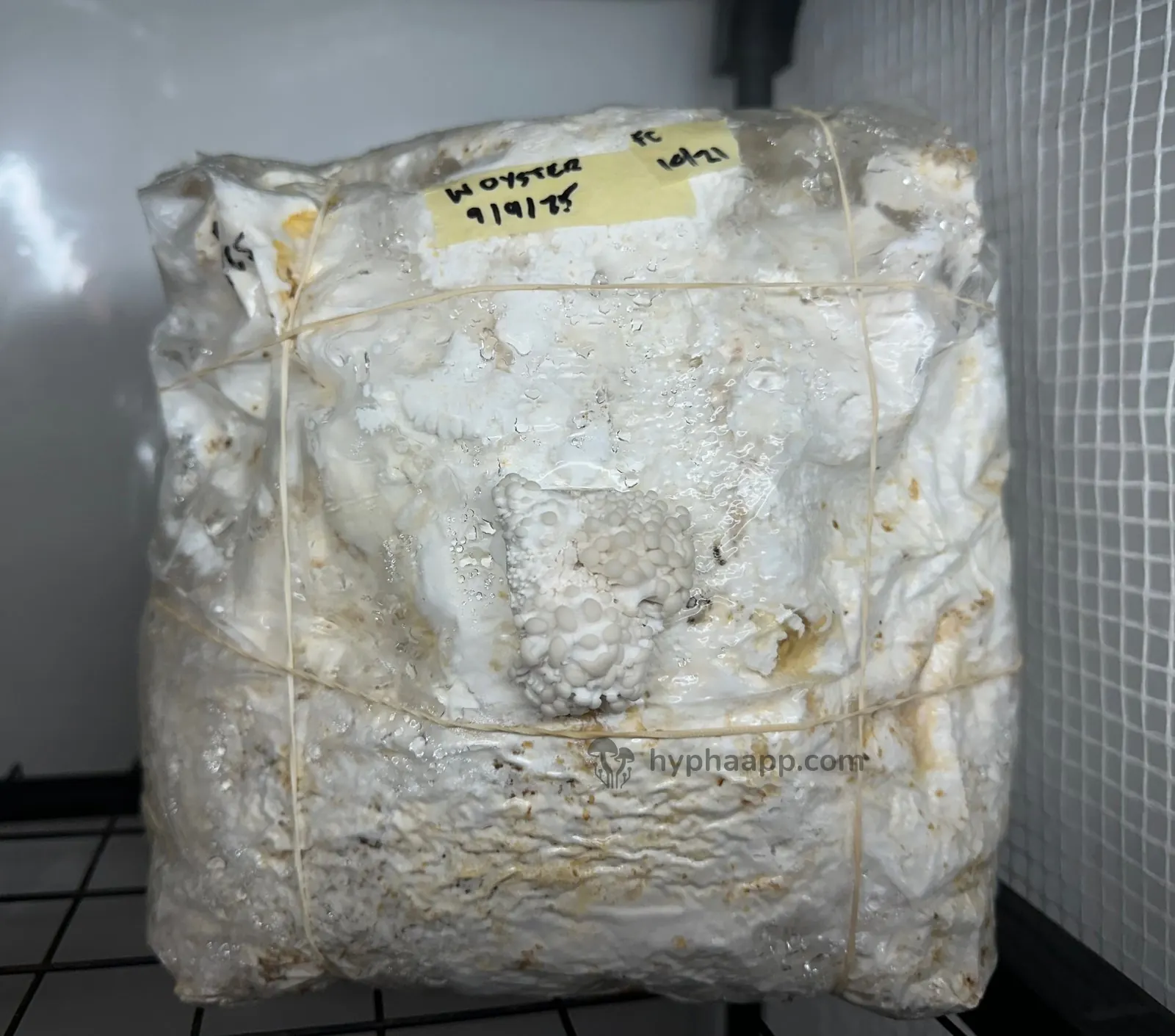
Primordia in a spawn bag spend energy the spawn would otherwise put into your substrate, so use that bag first (our reading). A little yellow liquid with a clean smell is the normal kind; a lot of it, or a sour smell, is the kind to worry about. Our contamination guide shows exudate next to real problems, and the pink oyster spawn guide covers what healthy and sour grain smell like.
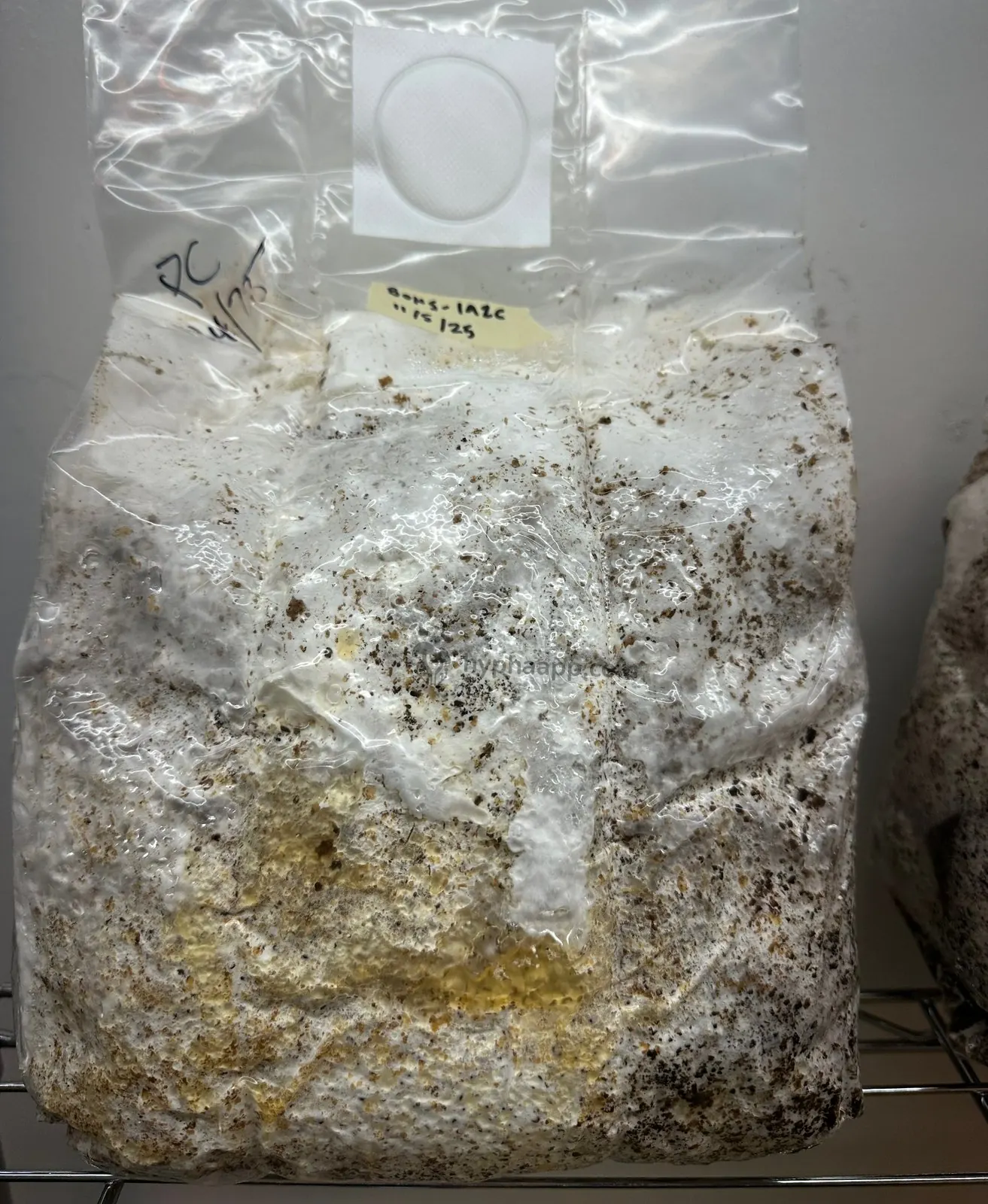
When you can't tell, put a few grains on agar before committing a batch of substrate (our advice); green, black or slime means contamination. We found no source that measured how much more slowly clean old spawn colonizes, so use a little more of it rather than less (our advice).
How do you warm up refrigerated spawn before using it?
Let it come up to room temperature with the bag still sealed. Caley Brothers says "Allow your spawn to come up to room temperature before starting the growing process" (Caley Brothers), and Penn State Extension says "Some growers will bring the spawn to room temperature before mixing it into the substrate" (Penn State Extension). We found no source that gives a number of hours; taking it out the night before you inoculate is our advice. Fresh deliveries get a rest:
- Fungi Perfecti: "Upon receipt, place your spawn at room temperature (approx. 70° F, 21° C) for approximately 24 hours" (Fungi Perfecti).
- North Spore: for spawn shipped cold in its insulated boxes, "we recommend letting the bags sit at room temperature for 48 hours after receiving them before refrigerating again" (North Spore help center).
Don't freeze spawn to make it last. Field & Forest's answer to "Can I freeze spawn?" is "Not recommended" (Field & Forest), so keep it off the back wall of a fridge that freezes things there (our advice). Plan to use a whole bag once it's open: "It is not ideal to use spawn for more than one inoculation day" (North Spore help center).
How much spawn should you buy at once?
Only as much as you'll inoculate inside your seller's window, counted from the day it arrives (our advice):
- Plan the inoculation day first, with logs, straw or bags lined up, so spawn isn't waiting on substrate. Johnny's says logs "should be inoculated within a week or two of cutting" (Johnny's).
- Size the order to the substrate from your spawn rate (our spawn to bulk page compares rates), then add one bag, not five.
- Order grain spawn closest to the day, since it keeps the shortest; buy pink oyster only for a warm month you'll use it in.
- Use leftovers rather than storing them. Field & Forest says "Best to use it up!" and suggests you "Heavily inoculate remaining substrates (wood chips, straw, etc.)" (Field & Forest).
How do you track stored spawn and cultures in Hypha?
Log each bag the day it arrives, in a zone for your fridge (our advice). In Hypha, tap Monitor, then Zones, then the + button (Create zone); enter a Zone Name such as "Kitchen fridge", choose Fridge as the Zone Type and tap Create. Then in Grows → Blocks, tap the + button (Create grow block), pick the strain, set the growth stage to Spawn and its container, choose the fridge as its Zone, set the Start date to the day it arrived and tap Create. Tap the block and put the seller, lot and stated window in its Notes, such as "grain, 3 months in fridge per seller"; it saves as you type. When it comes out, use More options → Move to zone.
Once a plate, slant or liquid culture block is Ready, tap Put into Storage on its timeline and choose the zone; Take Out of Storage brings it back. If a bag passes its window unused, tap Finish and choose Failed; tick Add contaminated flag only if it molded, so your strain's contamination rate stays honest.
Hypha has no use-by field, won't remind you when stored spawn passes its window, and can't tell whether old spawn is alive. Hypha Aeris (closed beta, not for sale yet) reads CO2, temperature and humidity in a grow space. Download Hypha; the free plan holds 25 active blocks.